About
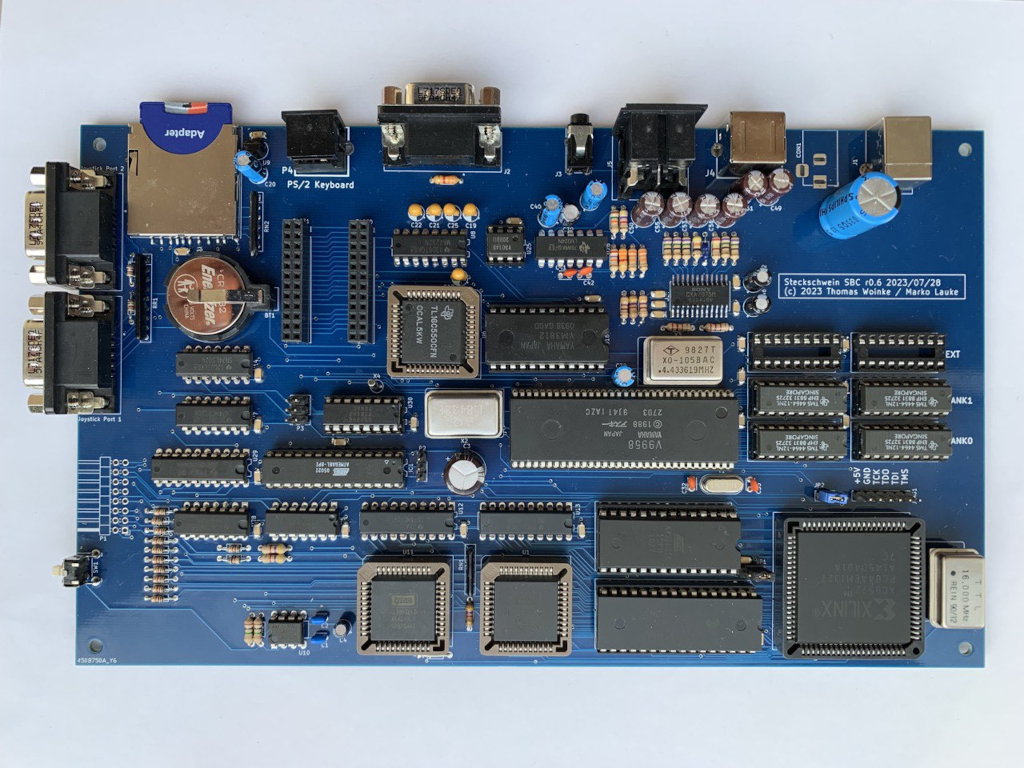
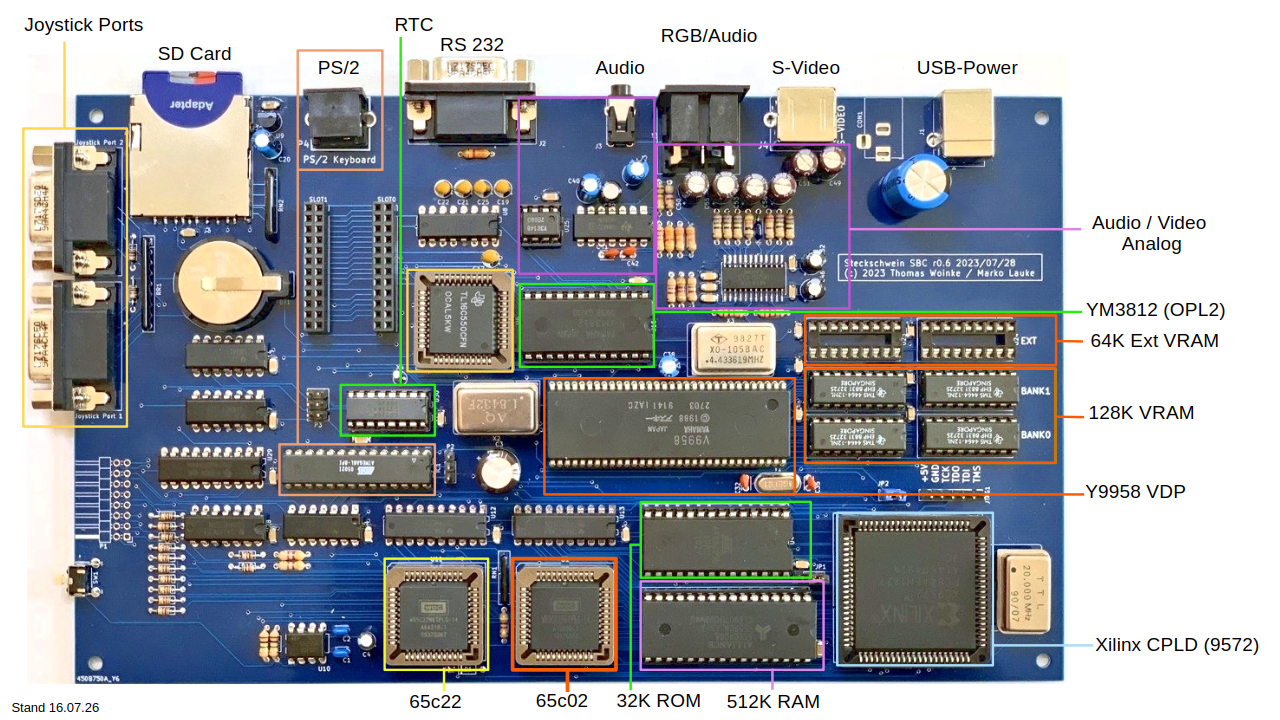
The Steckschwein is a homebrew 8bit computer based on the 65c02 CPU.
The Idea
The project began with a simple idea: create an 8‑bit computer that feels like it came straight out of the home‑computer era, yet works comfortably in today’s world. So instead of floppy disks, the system uses SD cards via SPI, blending classic design with modern convenience.
We started by using genuine period‑correct chips to stay as close as possible to the machines of that time. As those components have become harder to find, we’re gradually introducing modern replacements—always with the goal of preserving the original spirit.
The Name
The name “Steckschwein” comes from our breadboard beginnings—Steckbrett in German. With all those unruly wires, the prototypes behaved like little pigs, so the name stuck.
The Specs
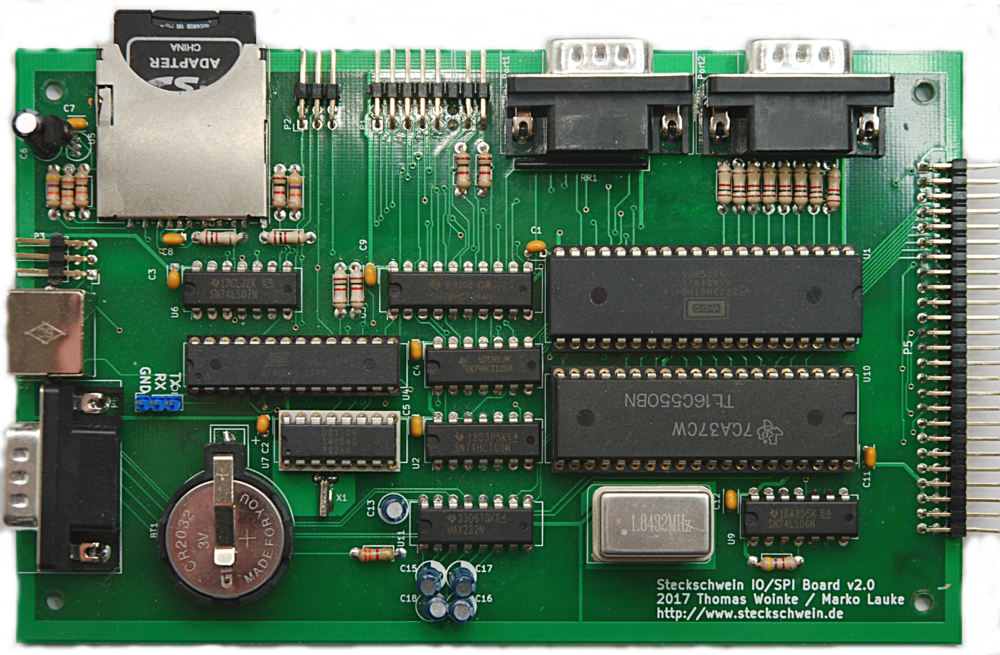
| Component | Specification |
|---|---|
| CPU | 65c02-CPU @ 10MHz |
| Memory | 512k SRAM / 512k Flash EEPROM |
| Storage | SD-Card (SPI) |
| Serial (rs232) | UART 16550 |
| IO | VIA 65c22 (2 Atari Joystick Ports + SPI (bit banged)) |
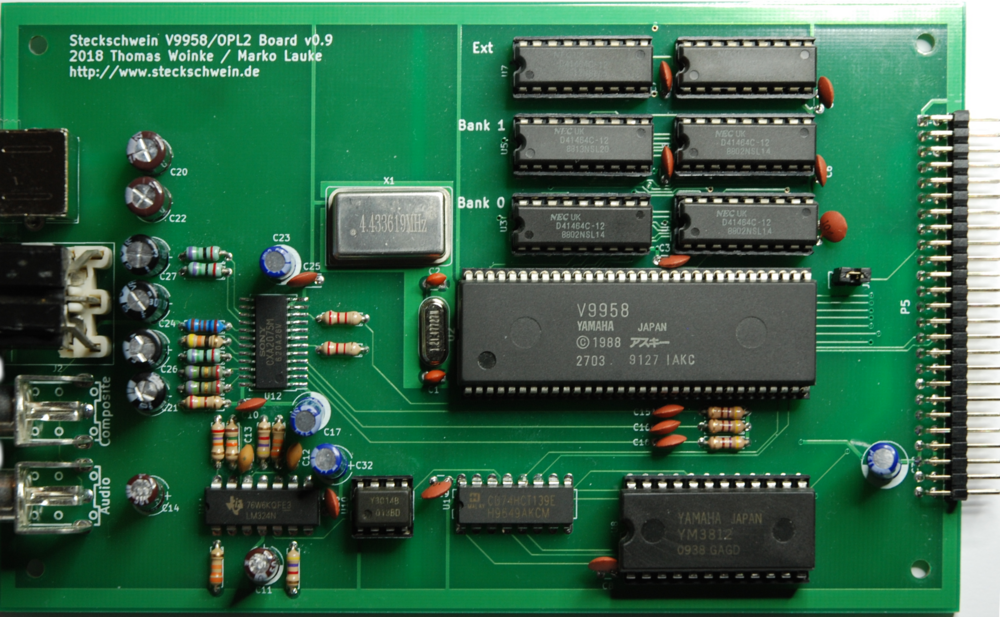
| Video | V9958 |
| Sound | YM3812 (OPL2) |
| Keyboard | PS/2 via ATmega8 over SPI |
| RTC | Maxim DS1306 |
Further reading and more details on Steckschwein Hardware.
The Story so far
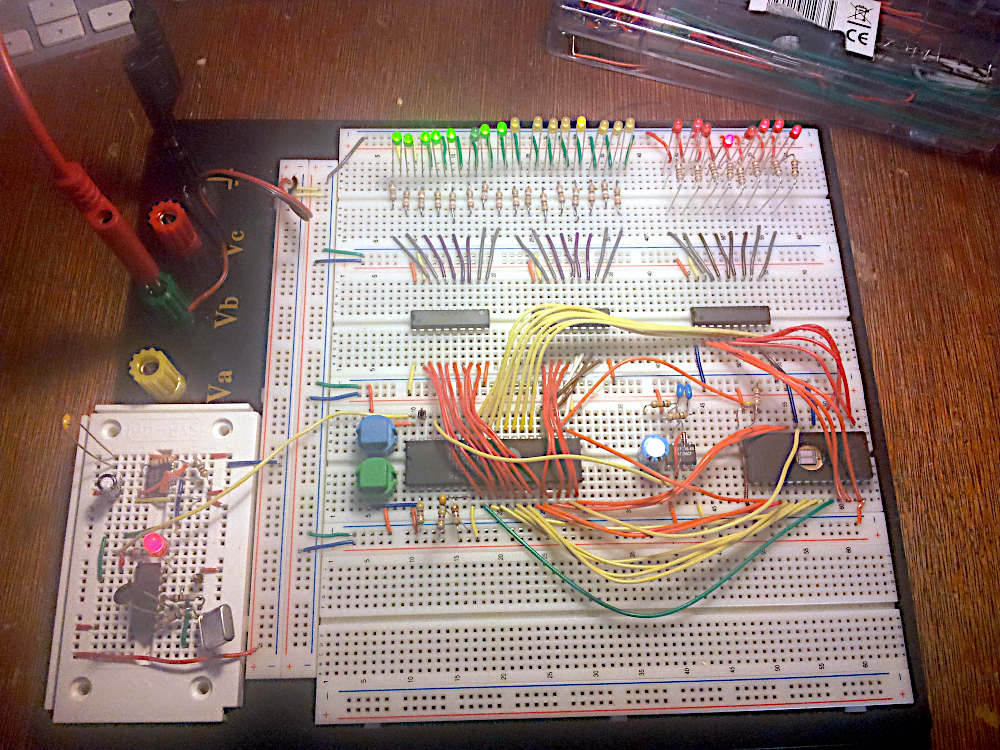
It all started with a NOP. We put a 65C02 CPU on a breadboard and hard‑wired its data bus to $EA — the 6502’s NOP instruction, meaning “no operation.” The address bus was connected to LEDs, and the CPU clock ran at about 1 kHz. The question was simple: would the LEDs show something that looked like binary counting?
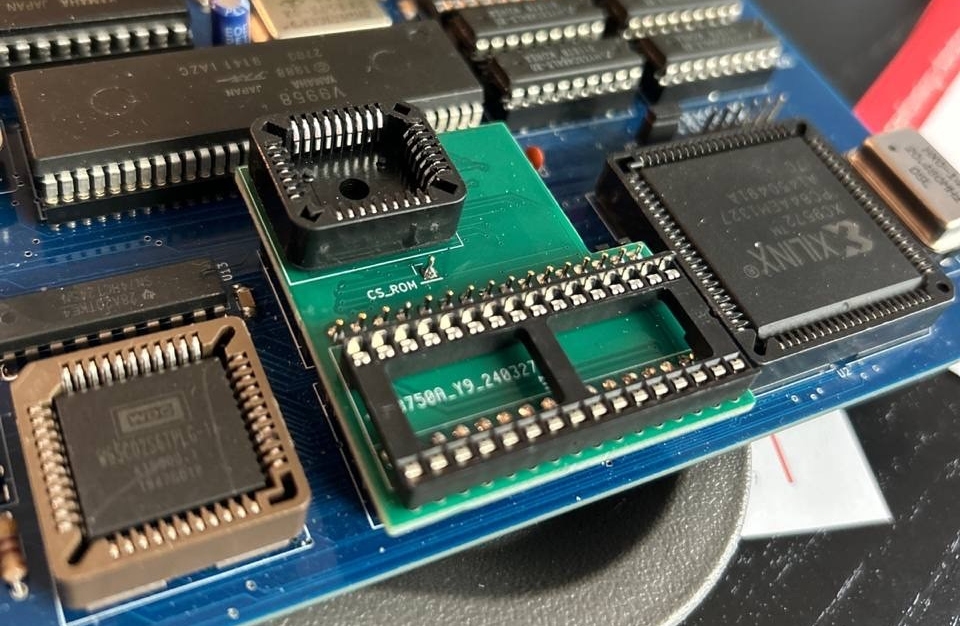
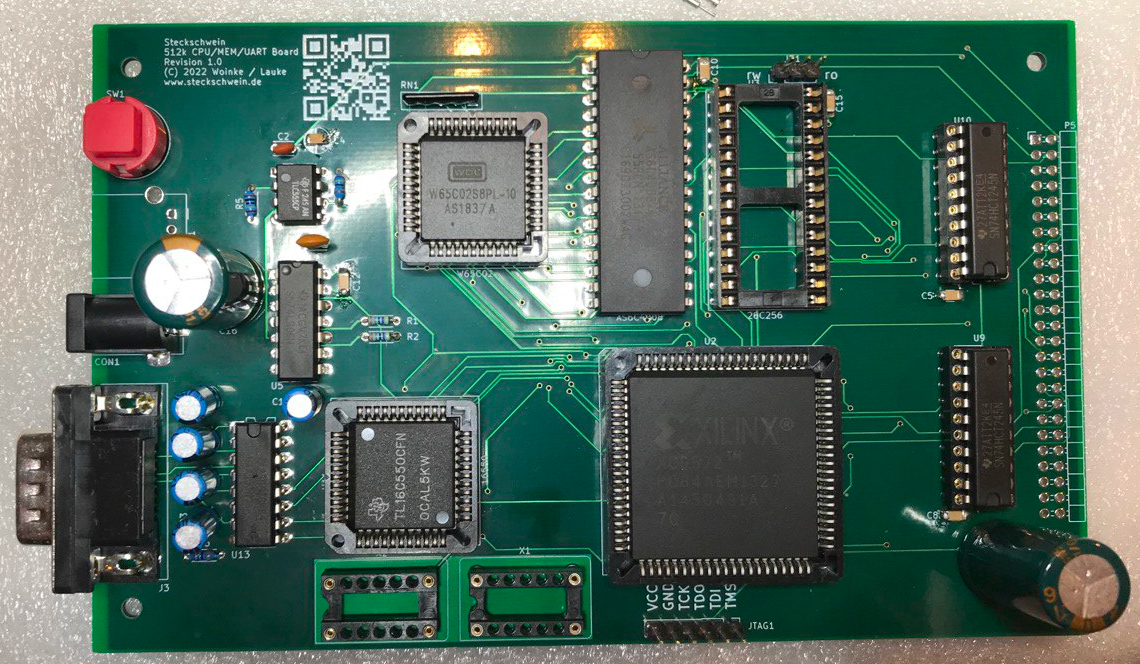
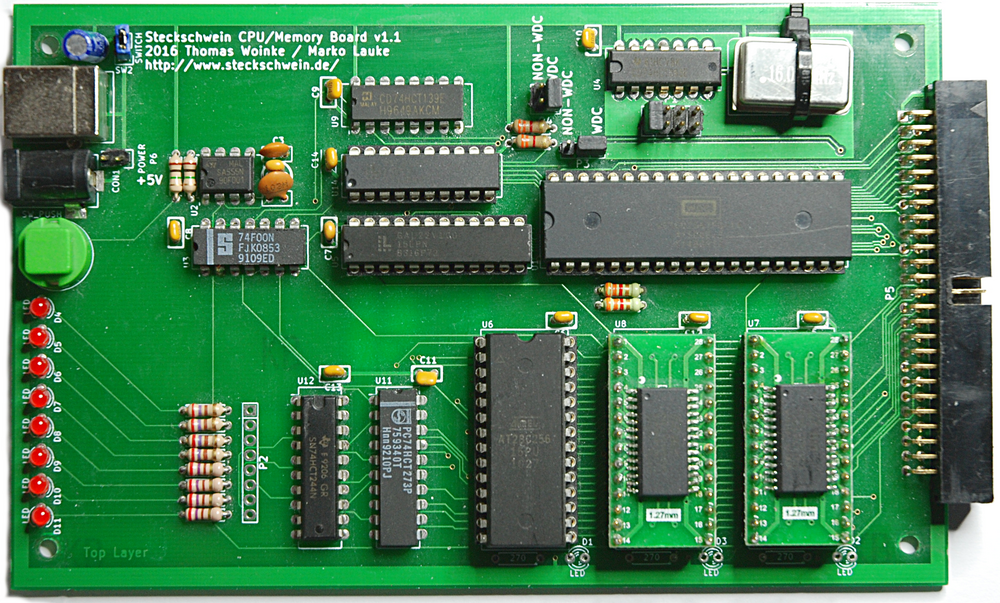
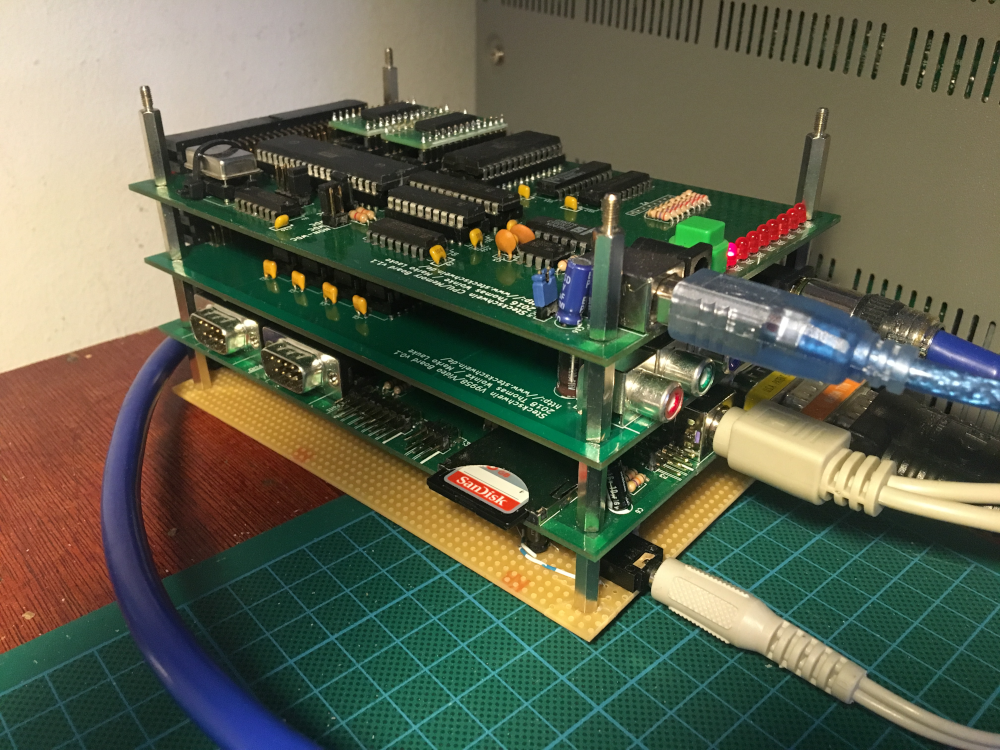
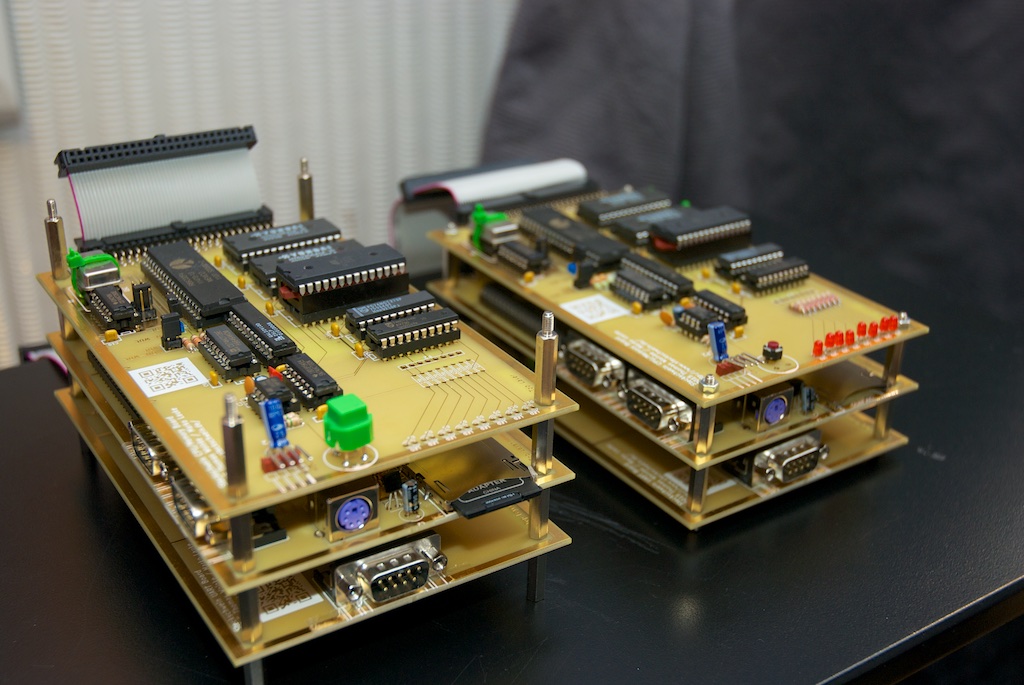
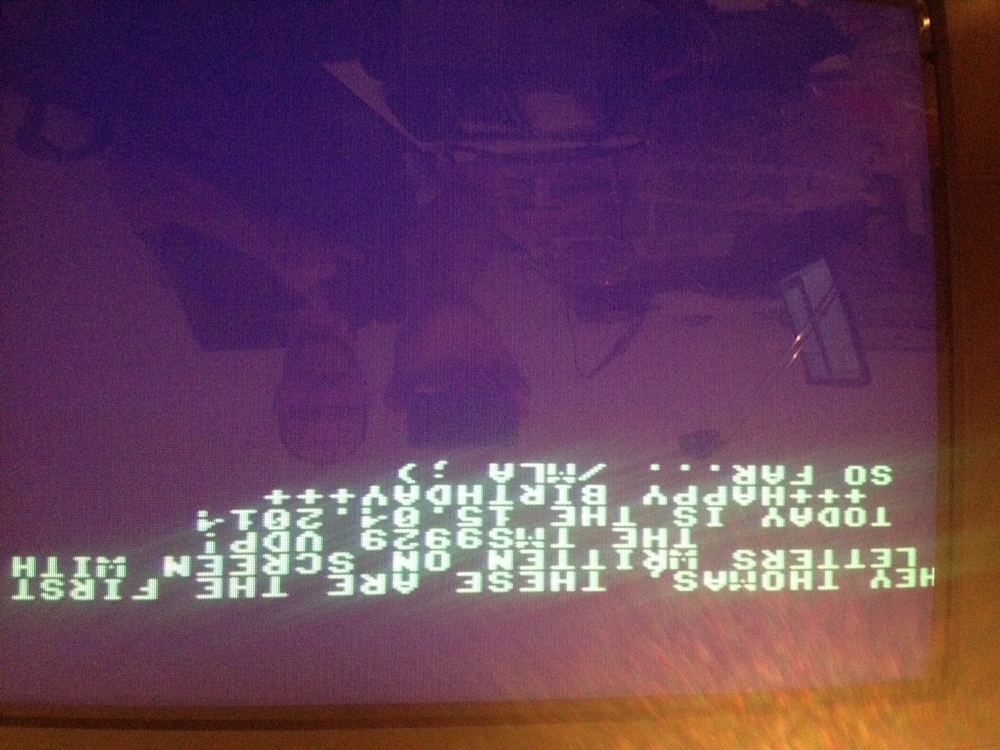
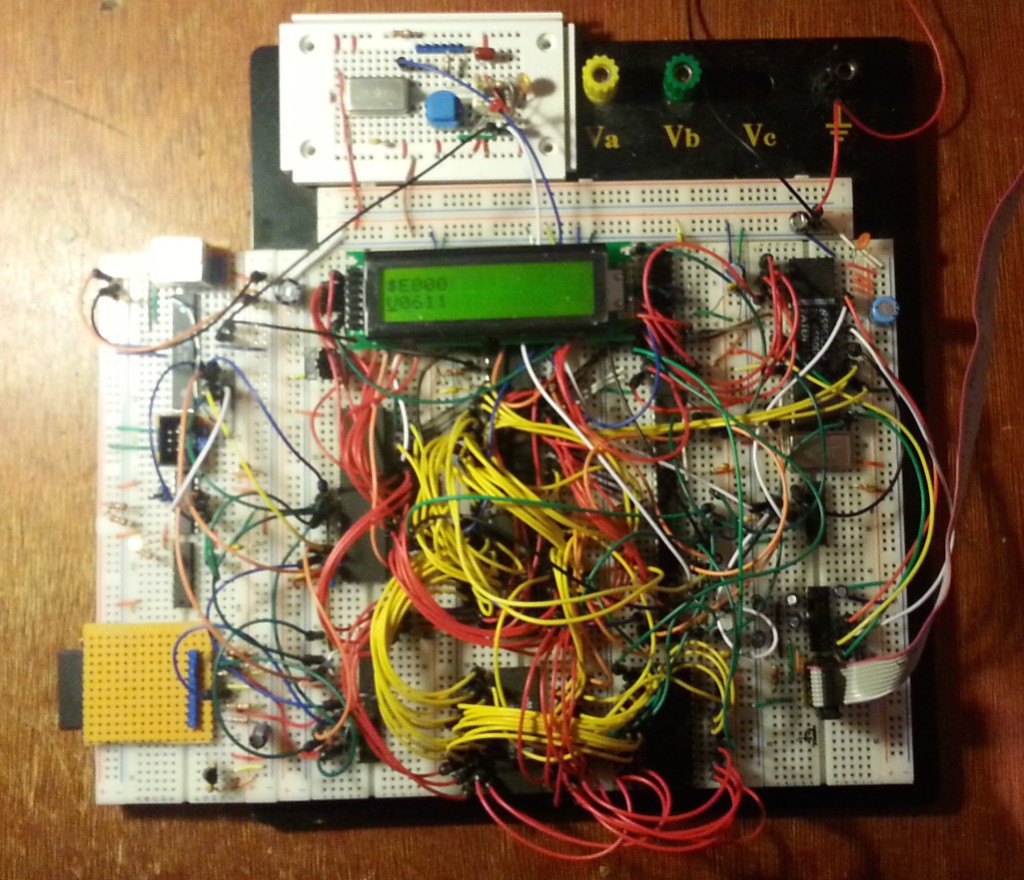
The photo series below highlights several milestones from the past years. For more detailed information about our development steps and processes, please visit our Blog.