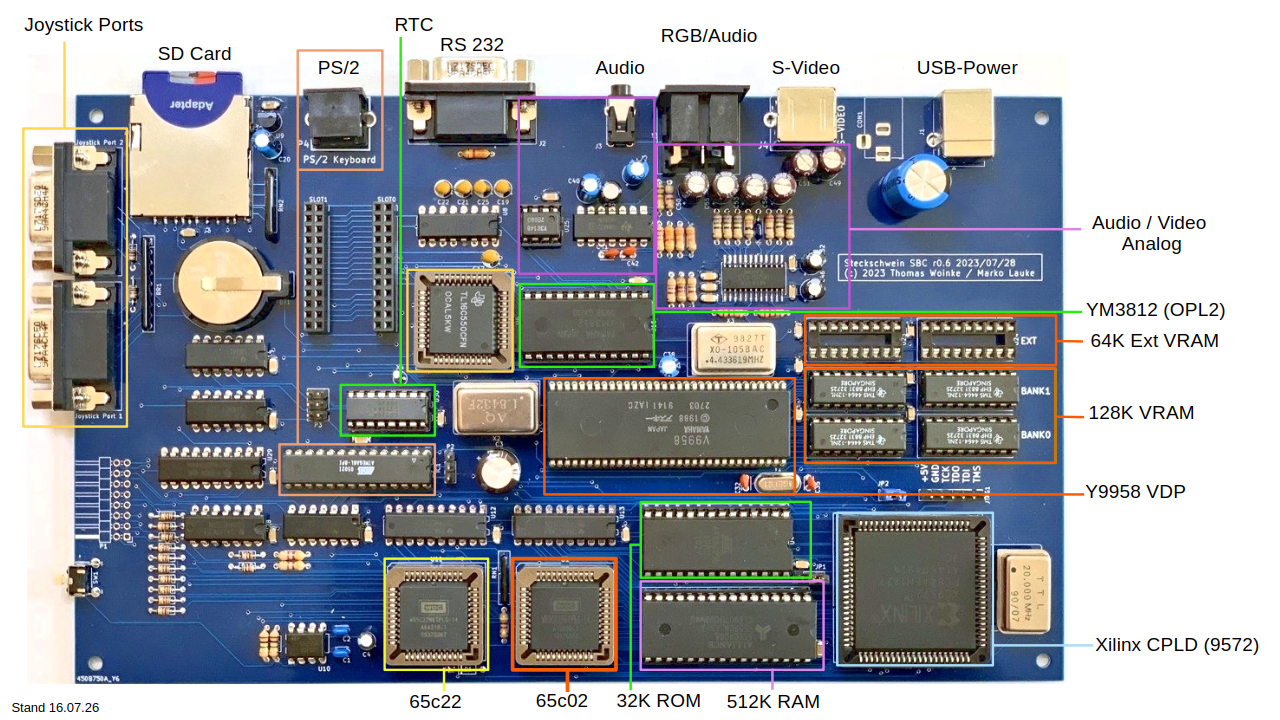
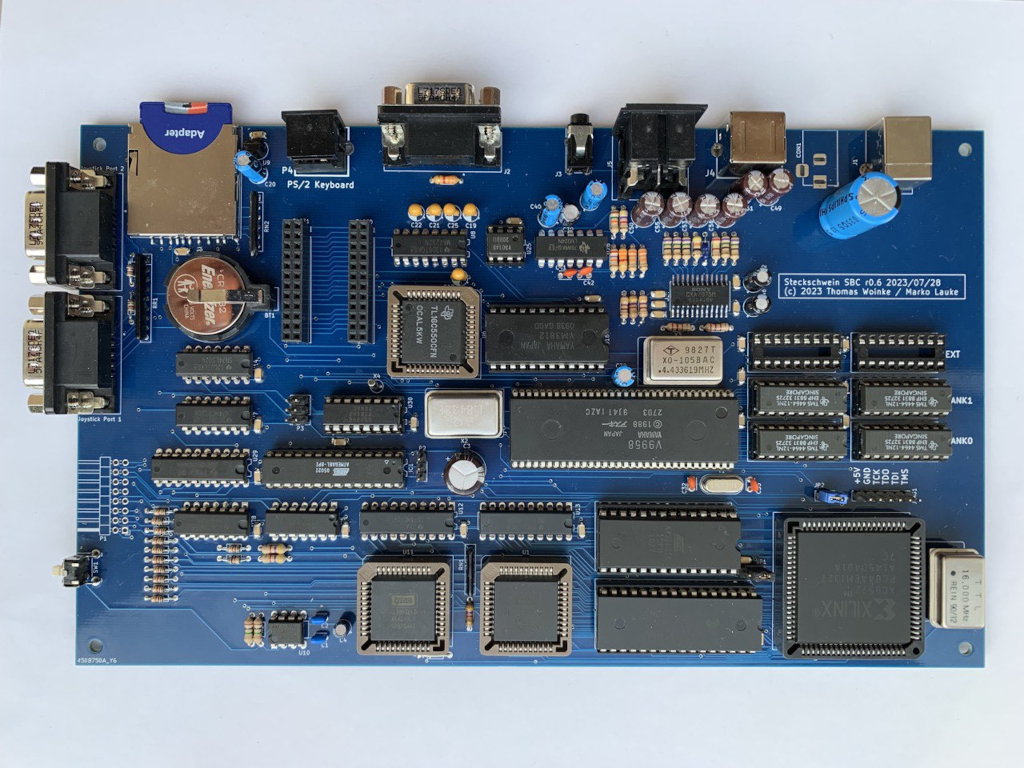
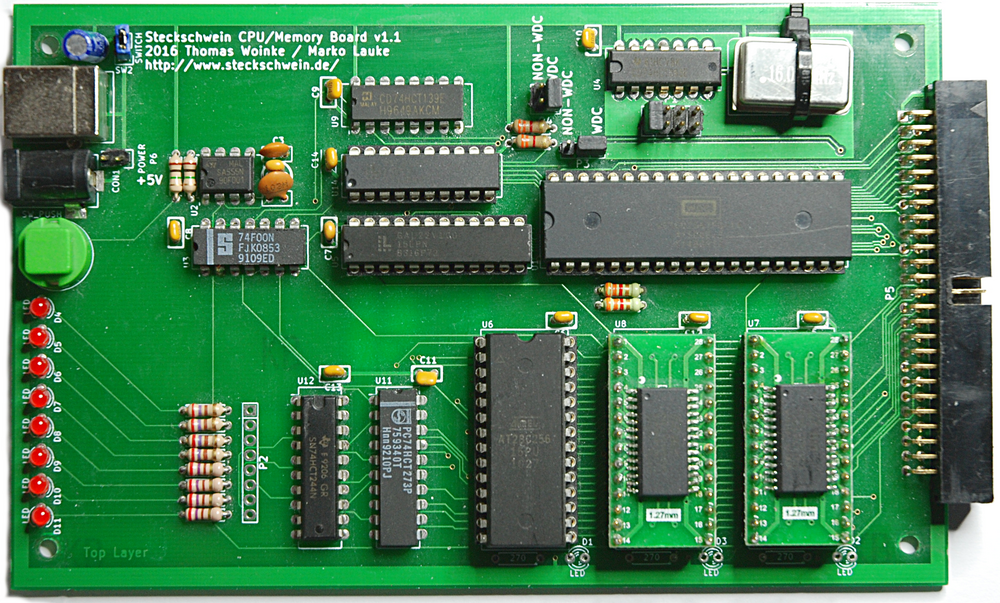
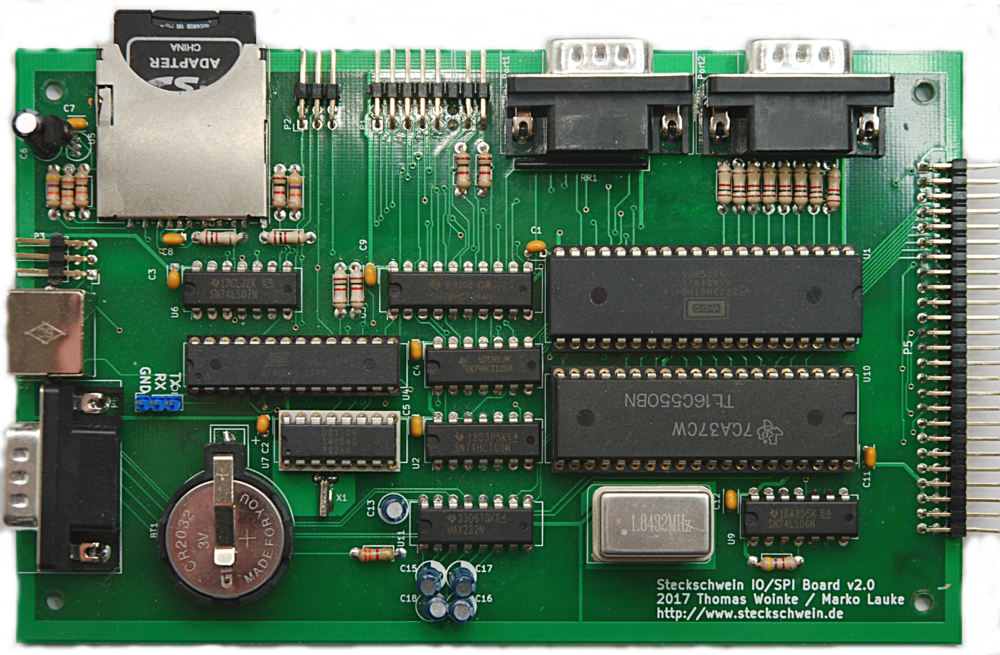
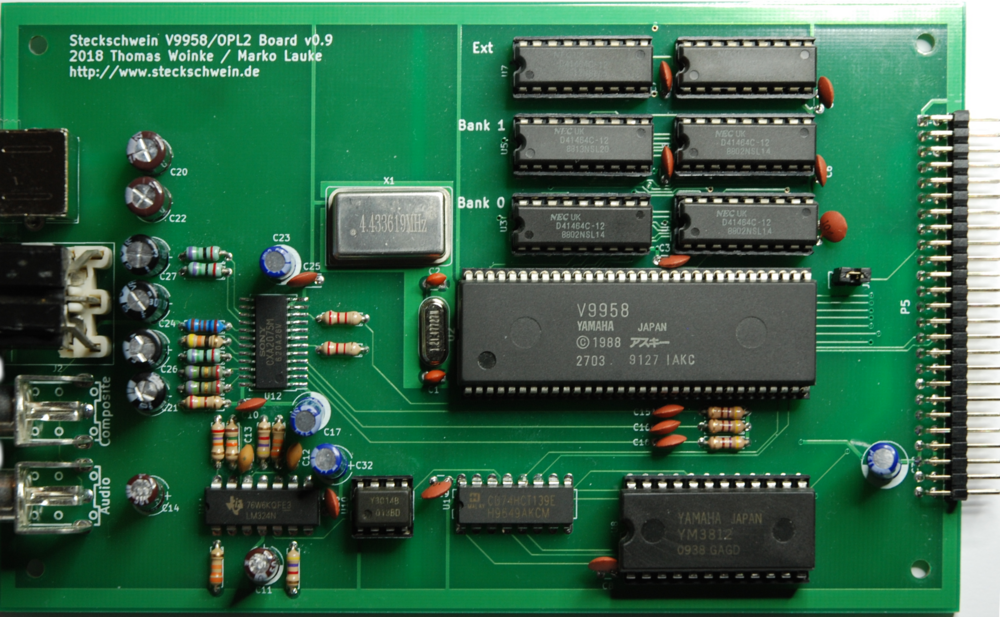
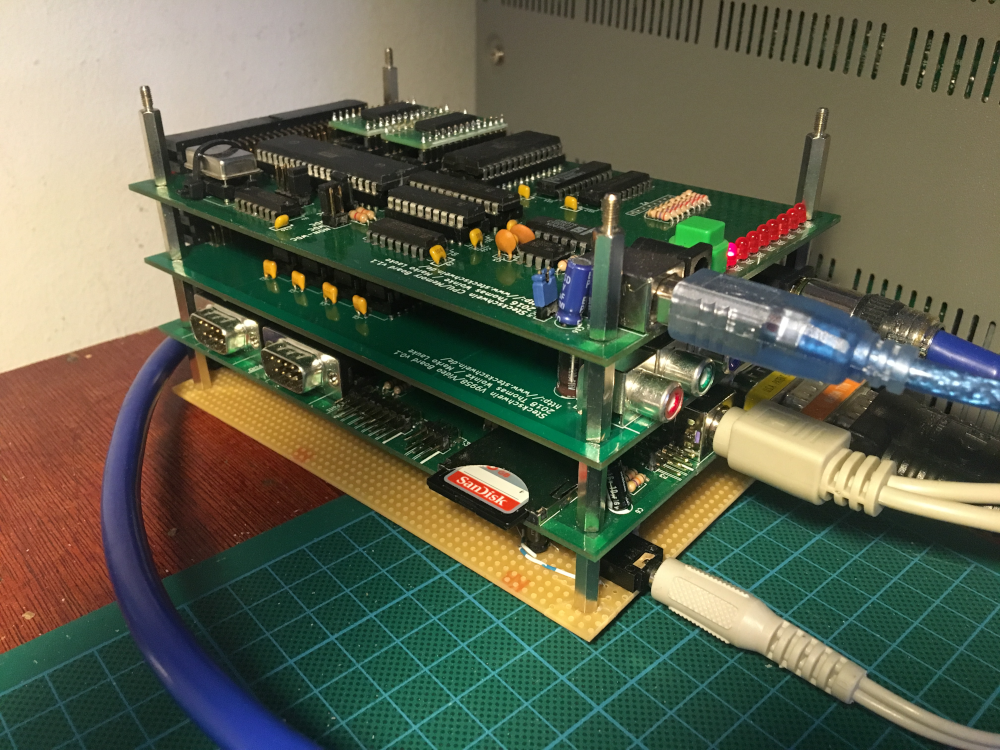
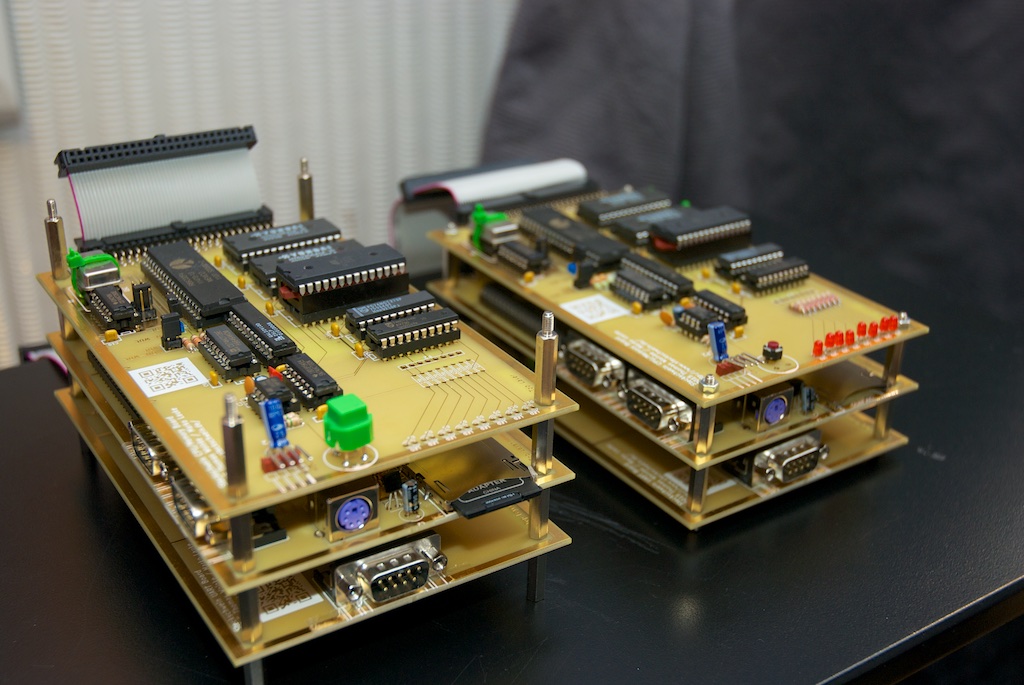
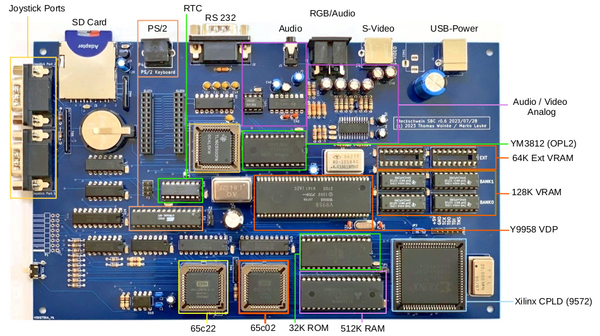
The Steckschwein is a homebrew 8bit computer based on the 65c02 CPU.
The Idea
The project began with a simple idea: create an 8‑bit computer that feels like it came straight out of the home‑computer era, yet works comfortably in today’s world.
So instead of floppy disks, the system uses SD cards via SPI, blending classic design with modern convenience.
We started by using genuine period‑correct chips to stay as close as possible to the machines of that time. As those components have become harder to find, we’re gradually introducing modern replacements—always with the goal of preserving the original spirit.
The Name
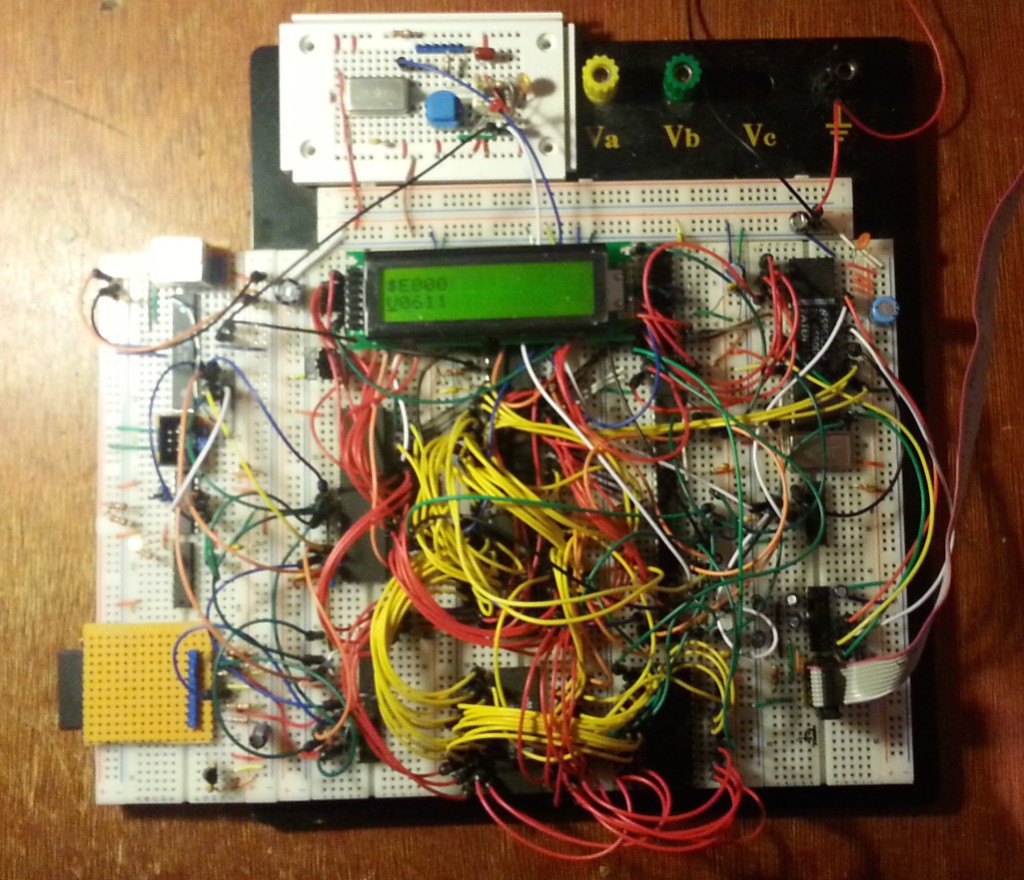
The name “Steckschwein” comes from our breadboard beginnings—Steckbrett in German. With all those unruly wires, the prototypes behaved like little pigs, so the name stuck.
The Specs
| Component | Specification |
|---|
| CPU | 65c02-CPU @ 10MHz |
| Memory | 512k SRAM / 512k Flash EEPROM |
| Storage | SD-Card (SPI) |
| Serial (rs232) | UART 16550 |
| IO | VIA 65c22 (2 Atari Joystick Ports + SPI (bit banged)) |
| Video | V9958 |
| Sound | YM3812 (OPL2) |
| Keyboard | PS/2 via ATmega8 over SPI |
| RTC | Maxim DS1306 |
Further reading and more details on Steckschwein Hardware.
The Story so far
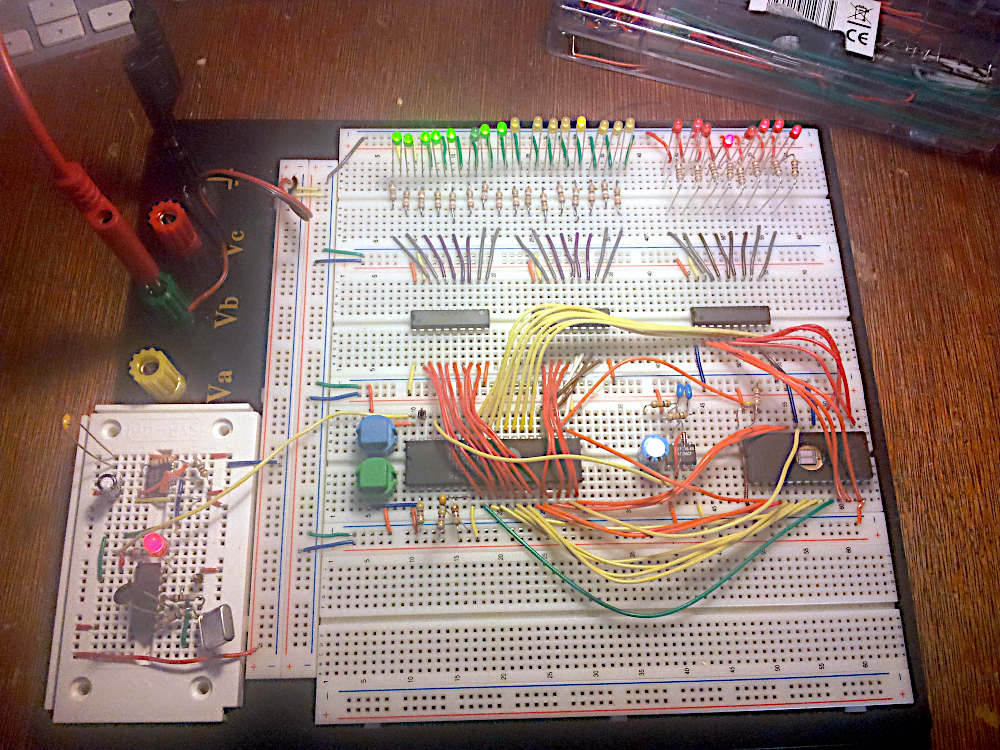
It all started with a NOP. We put a 65C02 CPU on a breadboard and hard‑wired its data bus to $EA — the 6502’s NOP instruction, meaning “no operation.” The address bus was connected to LEDs, and the CPU clock ran at about 1 kHz. The question was simple: would the LEDs show something that looked like binary counting?
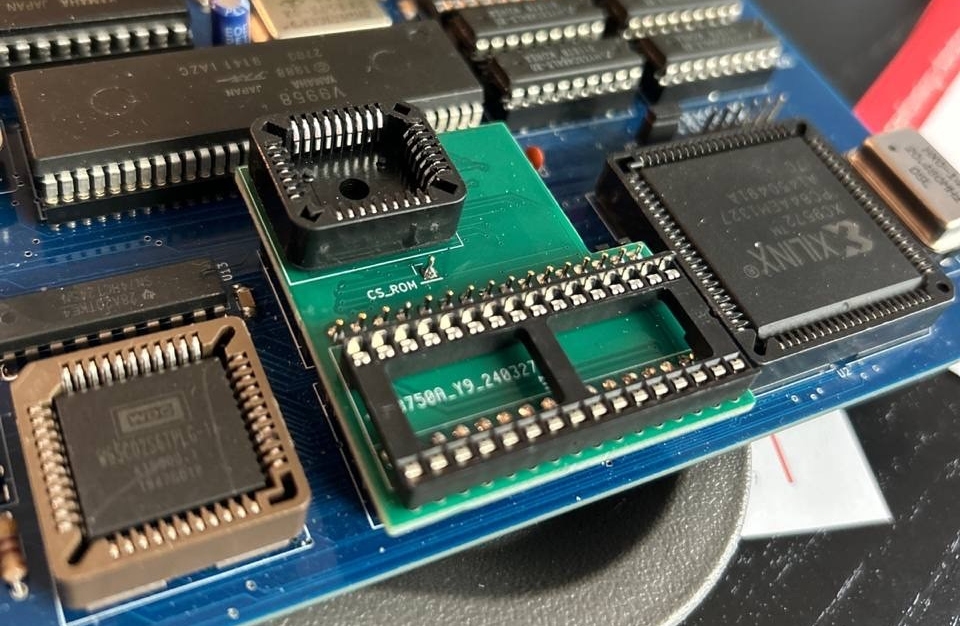
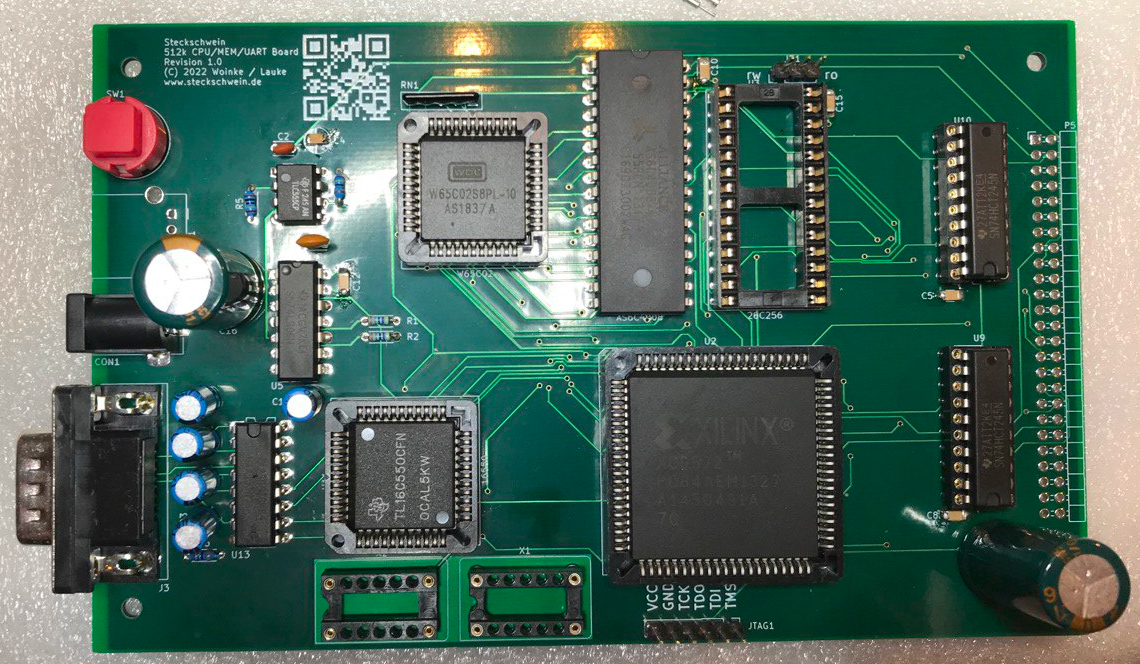
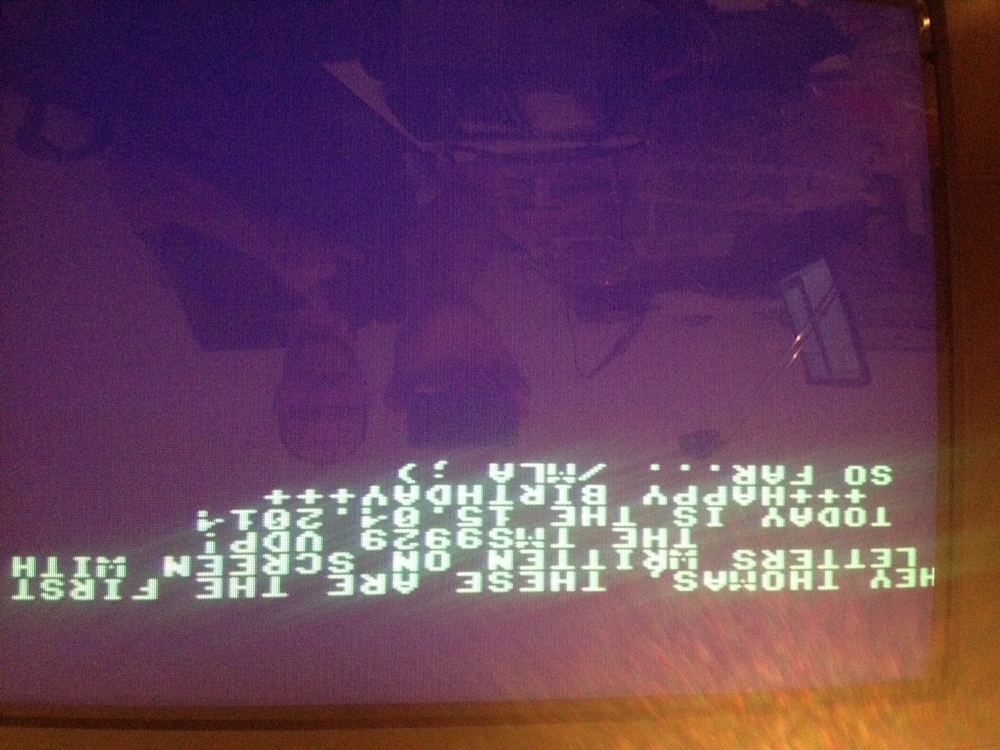
The photo series below highlights several milestones from the past years. For more detailed information about our development steps and processes, please visit our Blog.
The way the PS/2 keyboard is handled has always been something we were never quite happy with. The key points being:
- The PS/2 controller had no way of signalling that there has been a new keystroke, the buffer had to be polled via SPI.
- The PS/2 controller had no way of talking to the keyboard and had to rely for the keyboard to initialize itself properly. Also, typematic rate and delay could not be set, as couldn’t the states of the keyboard LEDs.
Although mid- to long term, we likely might “upgrade” to USB anyway, but not without having done PS/2 right first. So, I will talk about integrating IRQ handling, and in a follow up post Marko will talk about how he got the PS/2 controller talking to the keyboard.
Recently, Michael Steil published a blog post about connecting NES and SNES Controller to a 6502-based system showing how to use NES and SNES controllers on a C64 without the need for any special hardware, by just connecting them to the C64’s user port.
Why not use his approach and adapt it to the Steckschwein? The Steckschwein has a User Port, too, albeit a very different one as the C64. Basically, the Steckschwein-User-Port consists of the complete Port A of the VIA, plus the /RESET and /IRQ lines. Also of course, VCC and GND.
Chuck Peddle, the main designer of the 6502, has passed away on Dec. 15th, 2019.
Peddle was one of the engineers that developed the 6800 at Motorola. He later went to MOS in order to implement his vision of an 8bit CPU for way less than $300, which was Motorola’s price for the 6800.
This idea of a cheap but powerful CPU materialized as the 6501, and finally the 6502. That very chip, which started the microcomputer revolution, and on which both Marko and myself began to write our first code ever at an early age. BASIC at first, followed by assembly language later.
Back from the VCFB (Vintage Computer Festival Berlin) 2019 where we had good talks, met interesting people and got new ideas. Especially from Michael Steil who just asked the simple question “How you can develop software for the Steckschwein without an emulator?”
With the answer in my mind I felt a little annoyed and also “triggered” at the same time… However, Michael Steil was nice enough to strip down his Commander X16-Emulator into a barebone 65c02 computer emulator, so all we had to do was to implement our memory map (easy) and borrow a V9958 video chip implementation from blueMSX and implement it into the emulator (hard).
Marko talked about his Pacman port to the Steckschwein at VCFb. Basically it’s the same talk he did at VCFe in April, but this time, there’s a video. Enjoy!
https://media.ccc.de/v/vcfb19_-_111_-_de_-_201910121615_-_pac-man_auf_dem_steckschwein_-_marko_lauke
Frank van den Hoef, who is adapting the Steckschwein SPI & FAT32 code for his tiny65 machine made me aware of a classic mistake for a 6502 assembly coder to make. Namely in our sdcard driver, when waiting for the “proper” response from the card (which should have bit 7 cleared). The routine handling this looked like this:
1  sd_cmd_response_wait:
2 	ldy #sd_cmd_response_retries
3 @l:	dey
4         beq sd_block_cmd_timeout ; y already 0? then invalid response or timeout
5         jsr spi_r_byte
6         bit #80	; bit 7 clear
7         bne @l  ; no, next byte
8         cmp #$00 ; got cmd response, check if $00 to set z flag accordingly
9         rts
10 sd_block_cmd_timeout:
11        debug "sd_block_cmd_timeout"
12        lda #$1f ; make up error code distinct from possible sd card responses to mark timeout
13        rts
Classic. Obviously, line 6 should read: